The Oesophagus
After food is chewed into a bolus, it's enclosed and rapt through the oesophagus, a ~25cm long tube that connects your mouth to your stomach. It moves down the oesophagus in a very wave-like motion known as peristalsis. Circular muscles contract behind the bolus to stop it from being squeezed back to the previous second of the system. Ahead of the bolus, longitudinal muscles contract and widen the diameter and shorten the length of the tube. Peristalsis not only moves the food through the digestive system, but additionally aids within the mechanical digestion of the food and helps combine it with gastric juices and enzymes.
Snake oesophaguses can expand to four times their body width, allowing them to swallow gigantic animals, such as goats, or crocodiles.
 The Stomach
The oesophagus leads to the stomach. The stomach is a massive elastic bag which will expand to carry several liters of foood. this means a meal is ingested quickly and digested over time. Carbohydrates arriving at the abdomen have already begun to be become simple sugars by the enzyme amylase. Cells inside the gastric pits secrete 3 varieties of fluid, collectively known as gastric fluid.
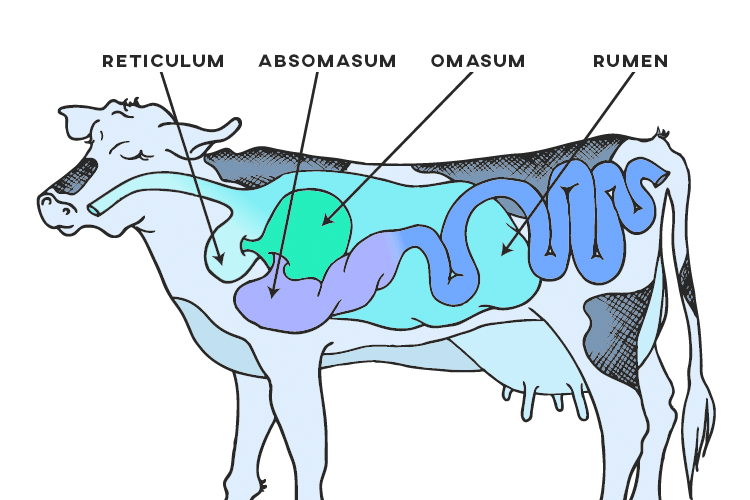
Cows have four stomachs; the reticulum, absomasum, omasum, and the rumen.
 The Small Intestine
The small intestine lies between the stomach and the large intestine (colon). The pH in the small intestine is usually between 7 and 9. It is the small intestine where absoroption of nutrients takes place. Proteins have been broken down in the stomach by enzymes and gastric acid into amino acids. Carboyhdrates have been broken down into simple sugars enzymes from saliva and pancreatic juice. Lipids have been broken down by the enzymes into fatty acid and glycerol. These small, soluble molecules can now be absorbed into the bloodstream. The inner walls of the small intestine are covered in small, finger like projections called
villi. The surface of the villi are covered with more small projections called
microvilli. These projections increase the surface area of the small intestine, increasing rate of absorption.
You can stretch a human's intestines out to about 6.7m long.
The Liver
The liver is that the second largest organ within the bod (the skin is that the largest). The liver performs 2 necessary biological process functions:
- After food has been digested within the small intestine, the nutrients are absorbed and transported to the liver via the hepactic portal vein.These nutrients (especially glucose, amino acids, fatty acids, and glycerol) are either converted into energy, transported to operating muscles, or held onto for later use.
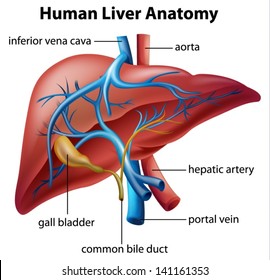
- A green-coloured fluid known as bile is made within the liver. Bile collects within the gall bladder and passes into the small intestine once needed via the bile duct. Bile is an aklaline fluid. It neutralises the acid from the stomach to forestall it digesting the remainder of the digestive system. It additionally helps break down lipids

A polar bears liver has enough Vitamin A to kill fifty two adult humans.
The Large Intestine
After it's passage through the small intestine all that remains of a meal is indigestible matter, mucus, dead cells, bacteria, some ions, and water. The water has come not solely from ingestion, but also from with the various scereted fluids (gastric, pancreatic, bile, e.t.c.). Reabsorption of ions and water is a very important function of the large intestine. It's inner surfaces don't contain villi. However, its surface area is magnified by numerous folds within the inner lining. After absorption of the ions and water, what remains is referred to as faeces. it's transported to the rectum where it's stored until egested via the anus.
The sperm whale has the largest large intestine of any organism on earth.

 What are key similarities and differences between plant and animal cells?