Pages

Tuesday, November 19, 2019

Solar System

As part of our SciPad topic, Astronomy, we were tasked with building a model solar system, containing the eight planets of the solar system:

Mercury, Venus, Earth, Mars, Jupiter, Saturn, Uranus, and Neptune.


This is our solar system. Unfortunately, due to circumstances outside of our control, two planets are missing. Mars & Uranus were taken from our box and replaced with two other, much smaller planets, which were unusable.

Mercury:
Mercury is 57.91 million kilometres away from the sun, and has a surface temperature of 427C°
It has no moons, and its atmosphere is comprised of hydrogen, oxygen, and helium.
The length of a day on Mercury is 58 days, 15 hours, and 30 minutes.
The length of a year on Mercury is 88 Earth days.
Your weight on Mercury would be 38% of your weight on Earth.

Venus:
Venus is 108.2 million kilometres away from the sun, and has a surface temperature of 462C°
It has no moons, and its atmosphere is comprised of carbon dioxide.
The length of a day on Venus is 116 days, and 18 hours.
The length of a year on Venus is 225 Earth days.
Venus, while farther from the sun than Mercury, has a higher surface temperature.

Earth:
Earth is 149.6 million kilometres away from the sun, and has a constantly rising surface temperature.
It has one moon, and its atmosphere is comprised of nitrogen and oxygen.
The length of a day on Earth is 23.934 hours.
The length of a year on Earth is 365.25 Earth days.
Earth is the only planet that supports life in our solar system.

Mars:
Mars is 227.9 million kilometres away from the sun, and has a surface temperature of -63C°
It has two moons, and its atmosphere is comprised mostly of carbon dixiode and nitrogen.
The length of a day on Mars is 1 day, and 37 minutes.
The length of a year on Mars is 687 Earth days.
Mars's atmosphere is 95% thinner than Earth's.

Jupiter:
Jupiter is 778.5 million kilometres away from the sun, and has a surface temperature of -112C°
It has 79 moons, and its atmosphere is comprised mostly of hydrogen.
The length of a day on Jupiter is 9 hours, 56 minutes.
The length of a year on Jupiter is 12 Earth years.
Jupiter is the largest planet in our solar system.

Saturn:
Saturn is 1.434 billion kilometres away from the sun, and has a surface temperature of -185C°
It has 62 moons, and its atmosphere is comprised mostly of hydrogen.
The length of a day on Saturn is 10 hours.
The length of a year on Saturn is 29 Earth years.
Saturn has a large ring around it's surface.

Uranus:
Uranus is 2.871 billion kilometres away from the sun, and has a surface temperature of -224C°
It has 27 moons, and its atmosphere is comprised mostly of hydrogen and helium.
The length of a day on Uranus is 17 hours.
The length of a year on Uranus is 84 Earth years.
Uranus is a giant ice ball, having the coldest temperatures of any planet in our solar system.

Neptune:
Neptune is 4.495 billion kilometres away from the sun, and has a surface temperature of -200C°
It has 14 moons, and its atmosphere is comprised mostly of hydrogen and helium.
The length of a day on Neptune is 16 hours, and 6 minutes.
The length of a year on Neptune is 165 Earth years.
Neptune actually has five, very thin rings.

Friday, November 1, 2019

Moon Landing


Image result for moon landing flag
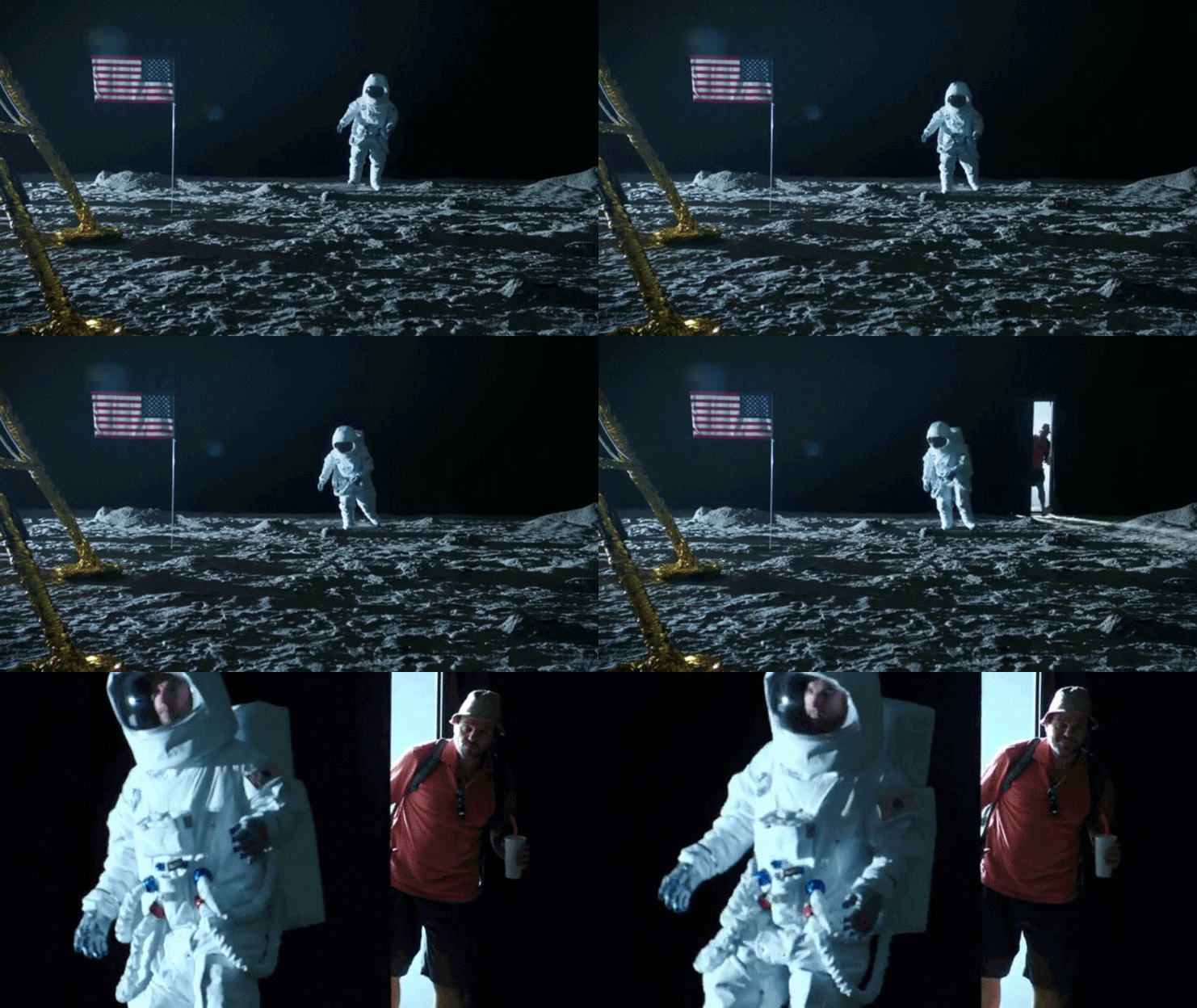
For our topic in science, we are learning about astronomy. In compliance with this topic, I will be researching about the moon landing, and whether or not it is a hoax.

The Flag
One of the biggest arguments about the moon landing is how the flag moves when it is placed. In the video of the moon landing, the flag can clearly be seen moving, as if it was being blown by the wind. Because the moon is in a vacuum, there is no air on the moon. Conspiracy theorists argue that because there is no air on the moon, that means there is no wind on the moon, and so the flag couldn't have moved, meaning that the moon landing must have been filmed on Earth.

However, because there is no air on the moon, that means there is also no air resistance on the moon. The force it takes to drive the flagpole into the moon's soil would cause the flag to begin moving, and because there is no air resistance on the moon, there is no friction to halt the flag's movement, meaning that the flag would continue waving forever.

Image result for moon landing
The Stars
In all photo/video evidence of the moon landing, no stars are visible in the sky. Because there ais no atmosphere on the moon, thousands of stars should be visible. This is another reason that people believe the moon landing is fake, and filmed in a studio. The reason there are no stars in the sky is actually because of how the moon's surface reflects light. The moon's surface is constantly reflecting light, meaning that the glow/glare of the moon would have made stars dificult to see. The lunar astronauts also used cameras with fast exposure settings, which would have limited background light.

The Lunar Crater
Theorists believe that the Lunar Lander should have blown up dust and caused a crater on landing, because the thrusters would be facing the moon, and would blow dust around. This did not occur because the lunar lander was actually horizontal when it was coming in to land, meaning tha tthe thrusters were not facing the moon.

Thursday, October 31, 2019

Creative Writing

This is a snippet of creative writing I did in English today.

Murky water flooded out from the rusted sewer grating.
The foggy water— stained brown— dribbled its way along the gutter, until reaching the roadblock that was my head. This feces-ridden  liquid, with nowhere else to go, began to puddle around my cranium, seeping its way into my eardrums, my eyelids, and my open mouth. I catapulted myself to my feet, eyes widened. My head was throbbing, and the world around me was spinning. I shook my head, and began to regain my bearings. I was unable to recognise the surreal environment that I had been enveloped in. Tents, caravans, and shopping trolleys, and a wide variety of different pipes and syringes were scattered across the dirt-covered pavement. An elongated, high ceiling left the settlement below in a pit of darkness, filled only by the bonfires stashed in old, used propane barrels. The citizens of this fine, upper-class city laid around in trolleys, on the ground, or, like me, in sewer water-ridden gutters. I couldn’t help but stare. It was a community of homeless people. I was in a homeless settlement. My suit was in tatters, and goosebumps began to extend from my arms and legs, as the wind struck my damp hair, and undershirt. A nearly-empty bottle of whiskey struck my ankle, having been blown by the wind. I reached to pick it up, before shaking it, to determine how much alcohol was left in the bottle. I pursed my lips around the bottle’s used neck, and took a swig. Whoever had the bottle before me had watered the whiskey down, little by little, trying to make it last for as long as possible. Genius. My fingers unwrapped themselves from the bottle, letting it shatter on the cold, hard concrete below. I dragged my feet along the unwashed footpath, checking my pockets to see if I had my phone. It was drenched, and wouldn’t turn on. I let out the longest of sighs, before beginning my eternal search for the nearest bus stop...

If only I had any money left.

Tuesday, October 29, 2019

Weather with You


In English, we have been looking at creative writing. This is a quick exercise.

The man laid in the gutter, his hair and suit drenched by the constant downpour. A puddle formed around his head, comprised of both train rain and his tears. The strong wind blew his wet hair, causing goosebumps to rise along his arms and legs. The cool weather had numbed his face and body, and so the constant catapulting of sleet and hail didn’t affect him. Finally, he shut his eyes.